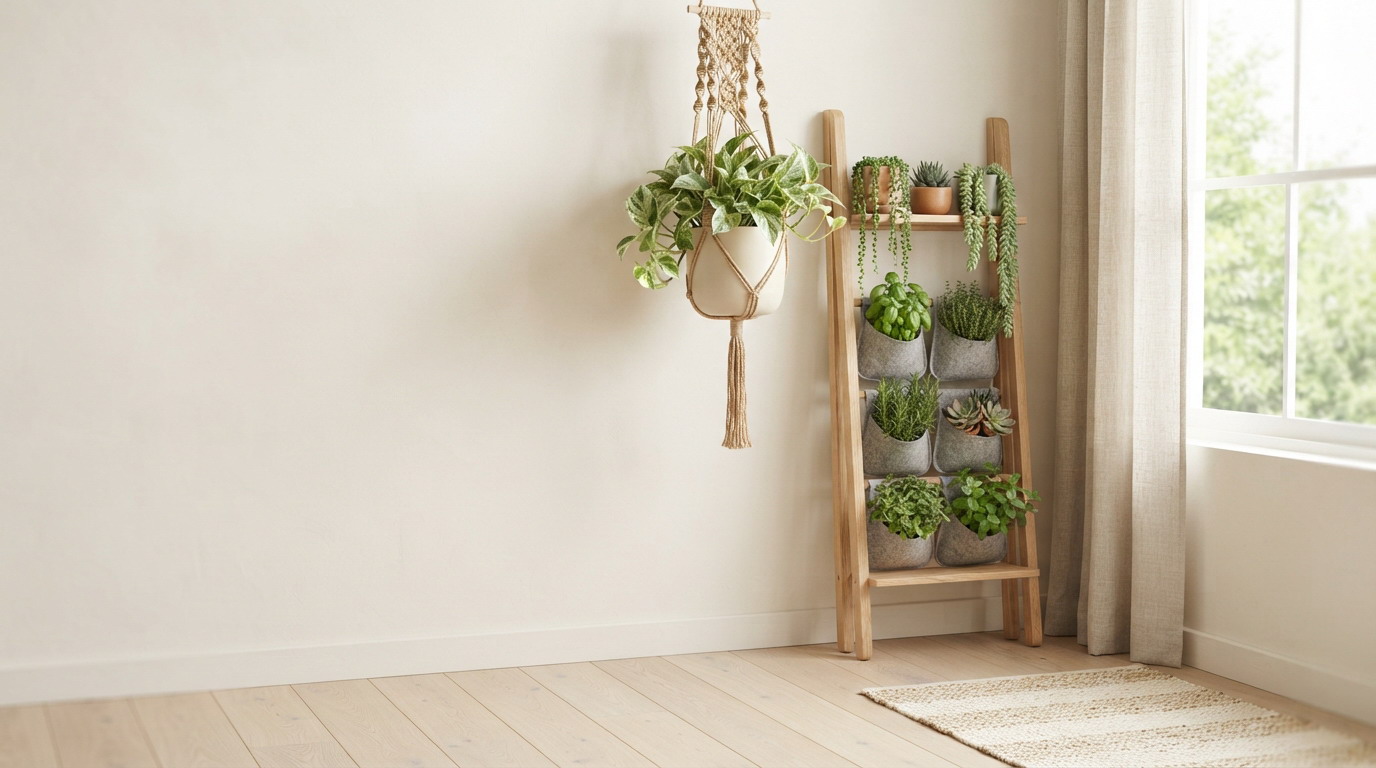
The Vertical Garden: 30 Small-Space Wall Garden Ideas for Beginners
If you’ve ever run out of windowsill before you ran out of plants you wanted, you already know the feeling this whole series is built around. The desk fills up. The shelf fills up. And somewhere in the middle of all that, you start noticing the one direction you haven’t used yet: up.
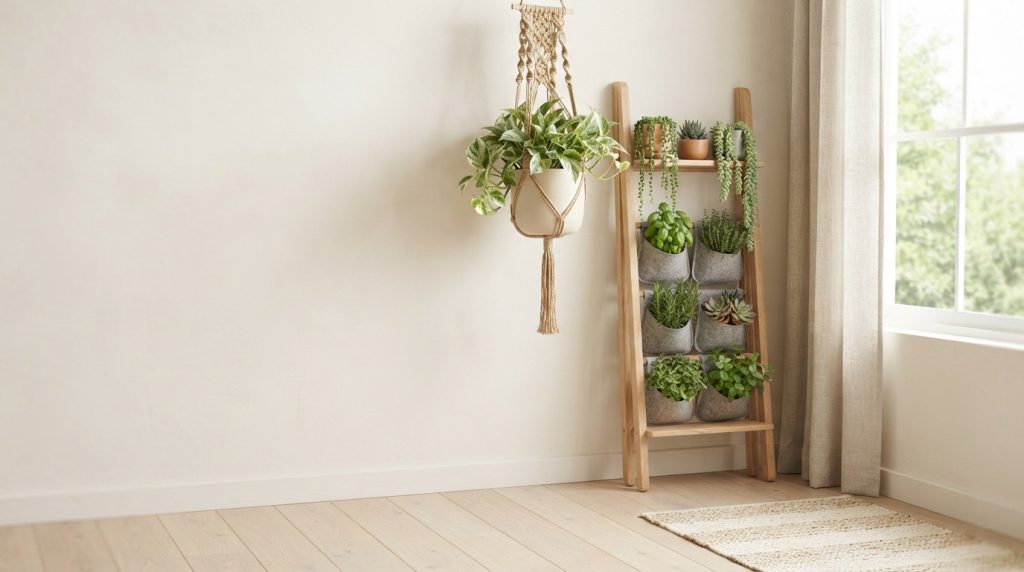
That’s the idea behind The Vertical Garden, Book Four in the Little Green Worlds series — thirty beginner-friendly projects that turn bare walls, empty corners, and unused ceiling space into a real, living display, without taking a single inch of counter or floor.
This post is the hub for everything vertical gardening on this blog. Bookmark it — we’ll link every new how-to, plant guide, and hardware explainer back here as they go live.
Why Go Vertical When You’ve Already Got a Tabletop Garden?
A vertical garden doesn’t compete with your other plants for space — it opens up room you didn’t know you had. A macramé hanger and a windowsill succulent dish can share the exact same window without touching. A felt wall-pocket herb garden and a kitchen counter can coexist without either one losing an inch.
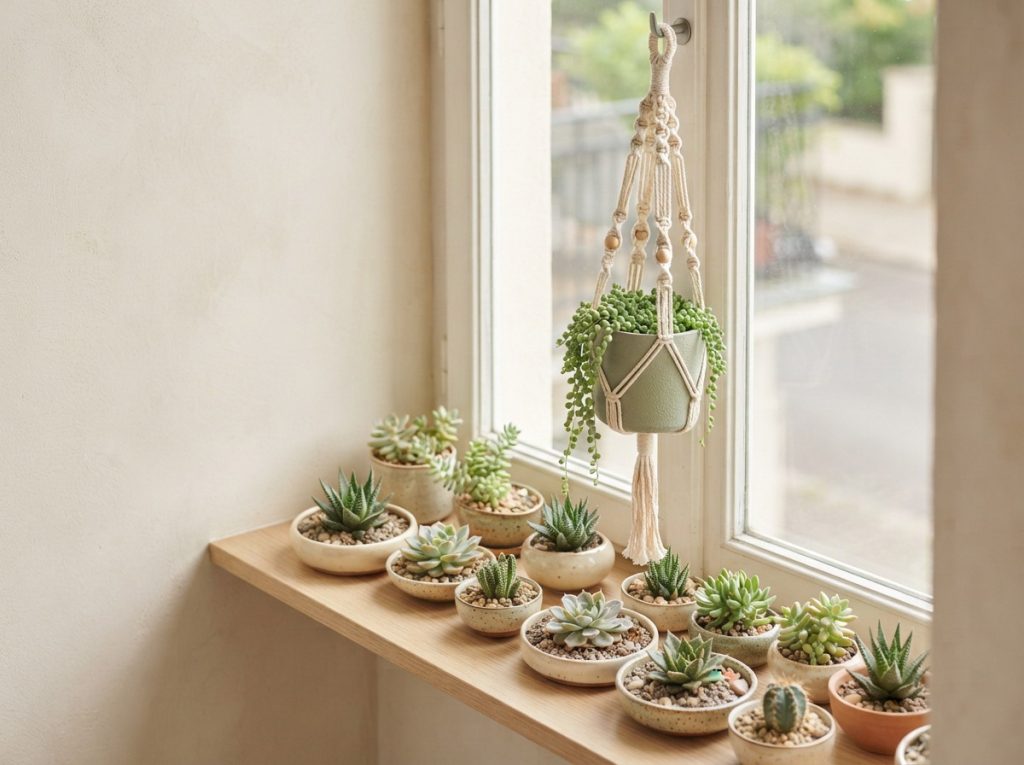
It also changes how a room feels in a way tabletop plants rarely do. Plants at eye level and above draw the eye upward, and a trailing vine spilling from a high shelf can make a low-ceilinged room feel taller almost instantly.
The One Rule That Makes or Breaks a Vertical Garden
[IMAGE 3]
Here’s the thing most vertical-gardening guides skip: the most common disaster isn’t a dead plant. It’s a healthy, well-watered plant that comes down off the wall anyway — because the hook was rated for a picture frame, not a pot full of wet soil.
Water is heavy. A “small” hanging planter can genuinely double in weight the moment you soak it. So before you fall in love with a project, match it to your wall:
- Find a stud (or use a weight-rated toggle anchor if you can’t).
- Weigh it wet, not dry — soil holds a lot more water than it looks like it does.
- Choose hardware rated for at least double what you actually need.
Get that habit in place once, and everything else about vertical gardening is exactly as forgiving as the rest of this series has always been.
Six Ways to Build a Vertical Garden (Pick Your Starting Point)
The book organizes all thirty projects into six families, and they’re a good way to think about where to start depending on your walls, your budget, and how much you feel like drilling into anything.
Macramé and rope-hung planters are the classic image of vertical gardening — a single pot cradled in knotted cord, swinging gently near a window. Two knots, repeated, and you’re done.
Wall pockets and pocket gardens turn one flat panel into a whole grid of small planting spaces — the fastest way to fit a real herb garden into a narrow strip of kitchen wall.
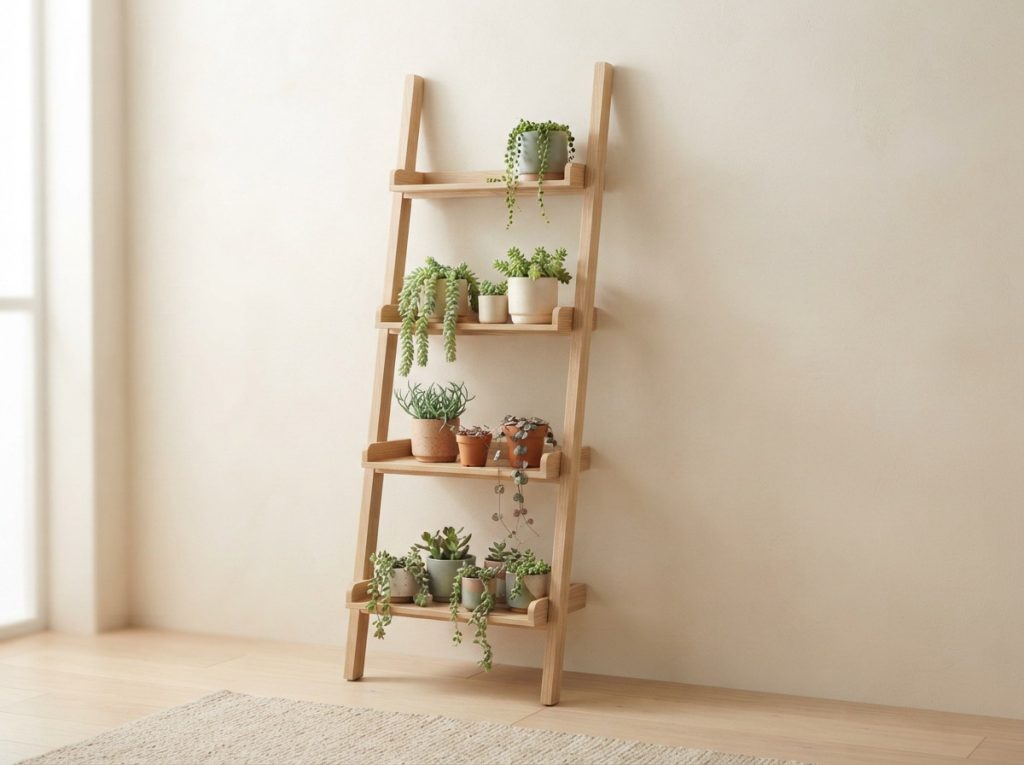
Shelf, ladder, and tiered displays step plants upward without a single hole in the wall — the gentlest entry point if you’re renting or just not ready to drill.
Living wall frames and moss panels are where a vertical garden starts to look like actual art — a shallow frame, dense with plants or preserved moss, hung like a picture.
Trailing vines and cascading showcases let one dramatic plant do the work: a moss-pole totem, a high-shelf cascade, leaves growing bigger as they climb toward the light.
Themed and decorative vertical gardens are where it gets fun — a hanging kitchen herb curtain, an office-safe no-drill kit, gift-ready hanging kokedama.
No Wall to Drill? Start Here Instead
If you’re renting, or you just don’t want to commit to hardware yet, start with a freestanding option: a ladder shelf leaned against a wall, a tiered wire stand, or an over-the-door hook. All of them build real vertical presence with zero holes in the wall — and they’re exactly where the book itself recommends starting if drilling makes you nervous.
What’s Inside The Vertical Garden
The book walks through all of this in order — reading your wall, matching hardware to weight, watering downward without soaking your floor — before getting into the thirty projects themselves, each with a difficulty rating, build time, light requirement, and exactly what kind of mount it needs.
It’s Book Four in the Little Green Worlds series, following The Tabletop Garden, The Miniature Garden, and The Water Garden — same small-space, low-stakes approach, this time aimed straight up.
[Get The Vertical Garden on Amazon →]
Related reading: [The Water Garden — Book Three] · [The Miniature Garden — Book Two] · [The Tabletop Garden — Book One]
- The Tabletop Garden: https://www.amazon.com/dp/B0H8HGD8VX
- The Miniature Garden: https://www.amazon.com/dp/B0HB96HTM5
- The Water Garden: https://www.amazon.com/dp/B0HBMC1W77