Betta Fish Bowl Setup: The Right Way (Not the Tiny Bowl Myth)
Meta description: A properly sized, humane betta bowl setup guide — real space requirements, water treatment, and planting, without the tiny-bowl advice that’s still floating around online.
If you’ve searched for “betta fish bowl setup” before landing here, you’ve probably already run into the image that’s everywhere: a betta swimming in a small, bare, often unheated bowl the size of a teacup. It’s marketed as the easy, low-maintenance way to keep a fish. It’s also not actually a kind way to keep one, and it’s worth understanding why before you set anything up — because a betta that’s genuinely well housed is barely more work than one that isn’t, and it looks a lot better doing it.
This guide walks through what a betta actually needs, how to set up a properly sized planted bowl, and the ongoing care that keeps both the fish and the water healthy.
Why the Tiny Bowl Advice Is Wrong
Bettas are often sold as a fish that can thrive in almost nothing — a few ounces of water, no filter, no heater. The reason that idea persists is that bettas are unusually hardy; in the wild, they’re adapted to survive in shallow, oxygen-poor rice paddies and can gulp air at the surface when the water quality is poor. Hardy is not the same as thriving. A betta can survive in a tiny, bare bowl the way a person can survive in a cramped, empty room — but survival and a genuinely good quality of life are different standards, and it’s worth aiming for the second one.
The practical guidance that actually reflects a betta’s needs: a minimum of roughly 2.5 to 5 gallons (about 10 to 19 liters) of water, with a small heater if your room regularly runs below about 76°F (24°C), since bettas are tropical fish. This is still a genuinely small, tabletop-sized setup by aquarium standards — nothing here requires a large tank or a dedicated aquarium stand. It’s a meaningfully bigger space than the myth suggests, and that difference matters more than it might seem: more water volume means more stable temperature, more stable water quality, and a fish with enough room to actually explore rather than just turn around in place.
If a genuinely 2.5-to-5-gallon setup isn’t realistic for your space right now, a plant-only bowl (no fish at all) is a better choice than compromising on a betta’s space — there’s no shame in starting there and adding a properly sized betta setup later.
What You’ll Actually Need
A container. Minimum 2.5–5 gallons, glass, with no drainage needed. This is larger than the bowls typically marketed for bettas, and that’s the point.
A small heater and thermometer, if your room runs cool. Bettas are tropical fish and do best in consistently warm water; a small, inexpensive aquarium heater solves this easily.
Substrate. Aquarium gravel or sand across the bottom.
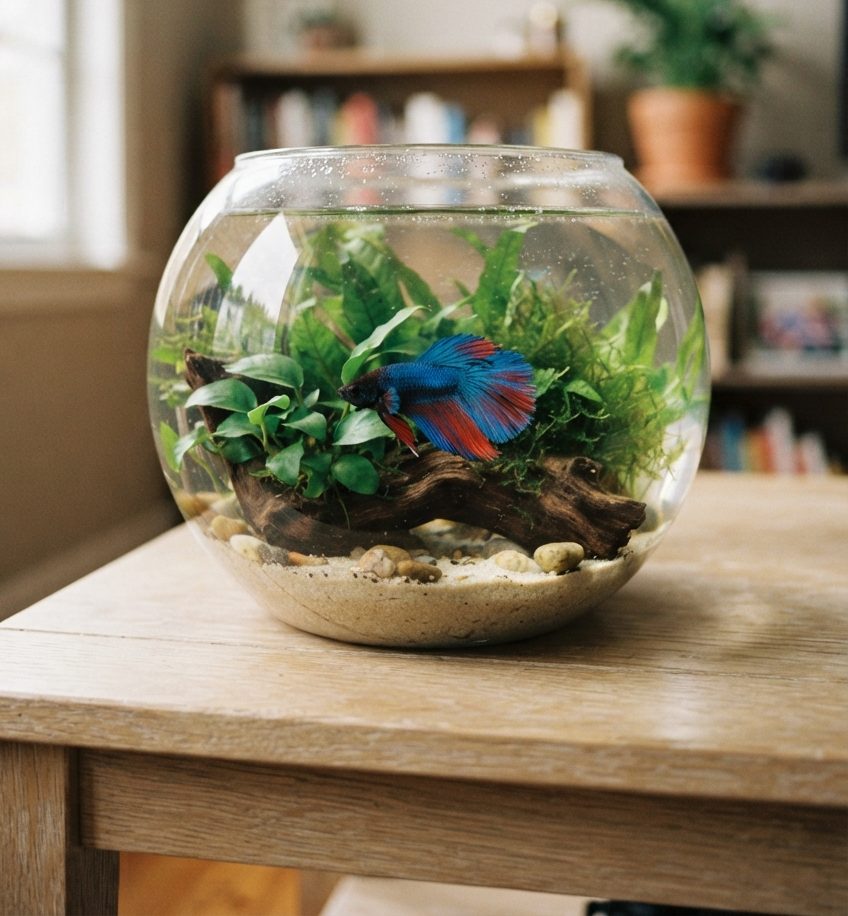
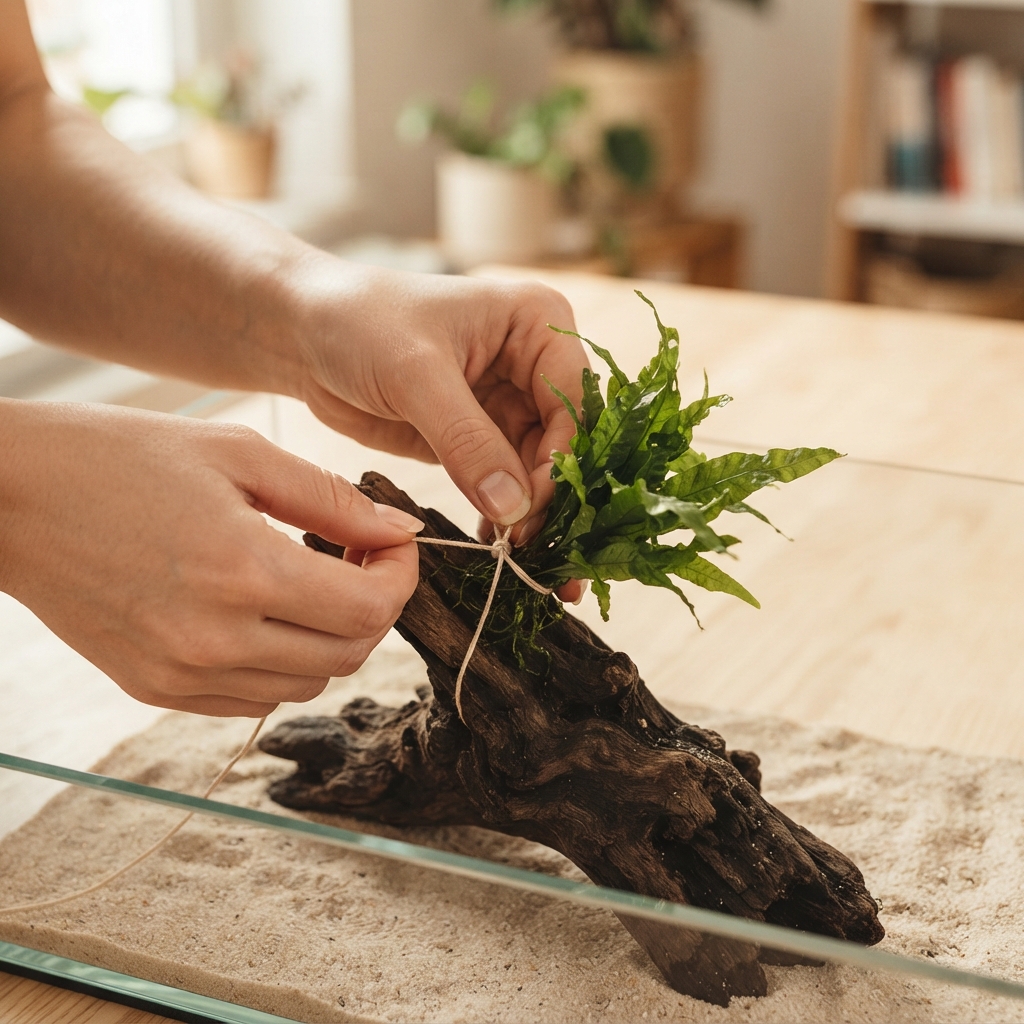
A piece of driftwood, plus java fern and/or anubias tied to it. Both of these plants are tied to hardscape rather than planted in soil, and both give a betta something to explore and rest near — genuinely enriching, not just decorative.
Treated water. A betta is a living animal, so this step isn’t optional the way it is for a plant-only bowl. A few drops of aquarium dechlorinator neutralizes the chlorine or chloramine in tap water instantly; both are harmless to drink but harmful to fish gills.
Setting It Up
- Rinse the gravel and spread it across the bottom of the container.
- Position the driftwood, with the plants already tied on using cotton thread or aquarium-safe glue.
- Fill with treated water and let the whole setup run for a few days before adding the fish — this gives the temperature time to stabilize and lets any initial cloudiness settle, the same way any new water garden needs about a week to find its balance.
- When you’re ready to add the fish, float its bag on the water’s surface for about fifteen minutes so the temperatures match before releasing it in.
Ongoing Care
Light. Medium, indirect light suits both the fish and the plants well — nothing needs direct sun here.
Feeding. A few betta pellets once a day, only as much as gets eaten within a couple of minutes. Overfeeding is one of the fastest ways to cloud up a bowl, since uneaten food breaks down and feeds algae and bacteria the same way any other decaying matter would.
Water changes. About 20–25% of the water, weekly. As with any water garden, the goal is small, consistent changes rather than large, infrequent ones — a full reset disrupts the balance the container has built up and tends to cause more cloudiness, not less.
Temperature. Keep it steady with the heater if your room runs cool. Bettas tolerate brief fluctuations fine, but consistency is easier on them than swings.
Signs Something Needs Attention
- Fish gasping at the surface is the one genuine emergency — it usually means an oxygen or water-quality problem. Do an immediate partial water change with properly treated water and scale back feeding.
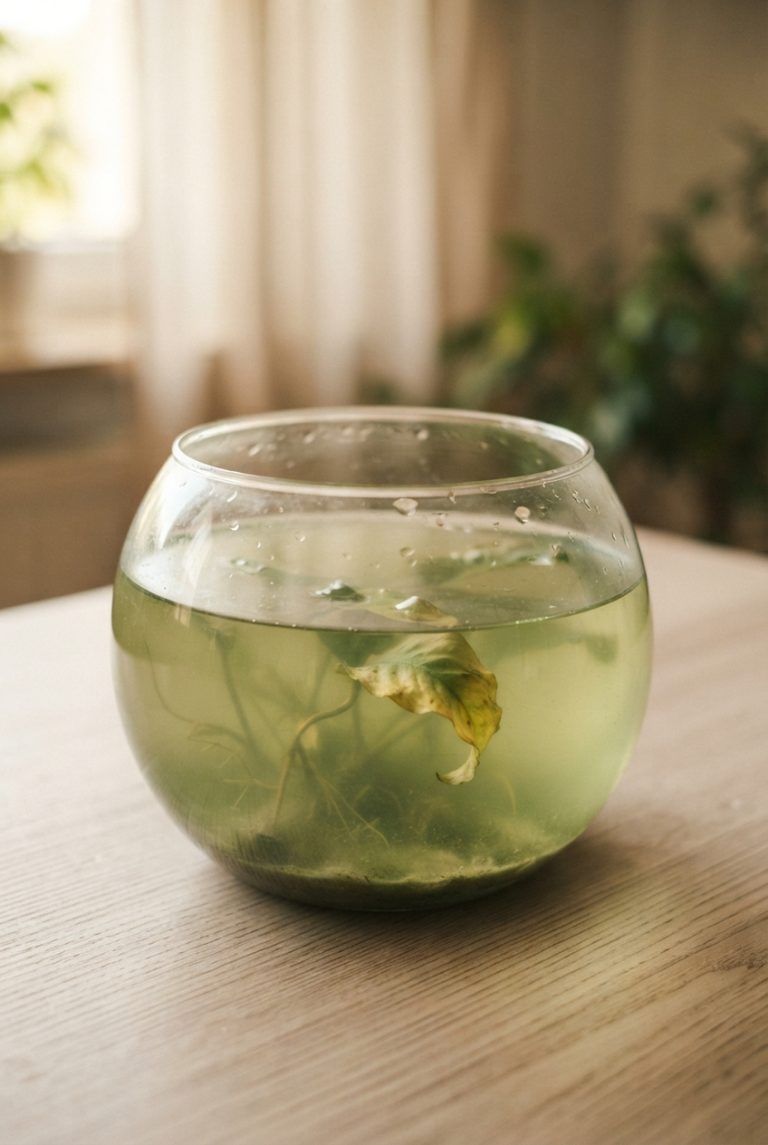
- Cloudy or green water follows the same logic as any other water garden: too much light or too many nutrients, correctable with less feeding, more plants, and a little patience.
- A fish that seems listless or is resting at the bottom often can simply mean the water’s too cold — check the heater and thermometer first.
Giving a Betta Something to Actually Do
Beyond the basics, the difference between a bowl a betta merely survives in and one it actually seems to enjoy usually comes down to structure. A bare container gives a naturally curious, exploratory fish nothing to investigate. Driftwood with plants tied on, arranged so there are a few different spots to rest near or swim around, makes a real difference — and it happens to look considerably better too.
This is one project from a larger set of fish-safe and plant-only water garden builds covered in How to Build a Water Garden at Home — including projects that need no livestock at all, if a full betta setup isn’t the right fit for your space yet. And if your bowl (with or without a fish) turns cloudy along the way, Why Is My Water Garden Cloudy? covers exactly what’s going on. Both, along with a complete welfare-first approach to every livestock project and thirty guided builds in total, are part of the full book, The Water Garden.
-The Tabletop Garden: https://www.amazon.com/dp/B0H8HGD8VX
-The Miniature Garden: https://www.amazon.com/dp/B0HB96HTM5
-The Water Garden: https://www.amazon.com/dp/B0HBMC1W77
-The Vertical Garden: https://www.amazon.com/dp/B0HCCKNCYB