Why Is My Water Garden Cloudy? (And How to Fix It)
Meta description: Cloudy water garden? Here’s what’s actually causing it, why the “fix” most beginners try makes it worse, and how to get clear water back — step by step.
You did everything by the book. Clean container, decent light, a healthy plant — and three days later, the water’s gone hazy green, or milky white, or just… off. If you’re staring at a cloudy bowl right now wondering what you did wrong, the short answer is: probably nothing serious. Cloudy water is the single most common thing beginners run into, and in the great majority of cases, it’s not a sign of failure. It’s a sign your water garden hasn’t finished settling yet, or that one of two very fixable things is slightly out of balance.
This guide walks through exactly what’s causing it, and — just as importantly — what not to do about it, since the instinct most people have is the thing that usually makes it worse.
First: What Kind of Cloudy Are We Talking About?
Not all cloudiness means the same thing. Before you do anything, figure out which one you’re actually looking at.
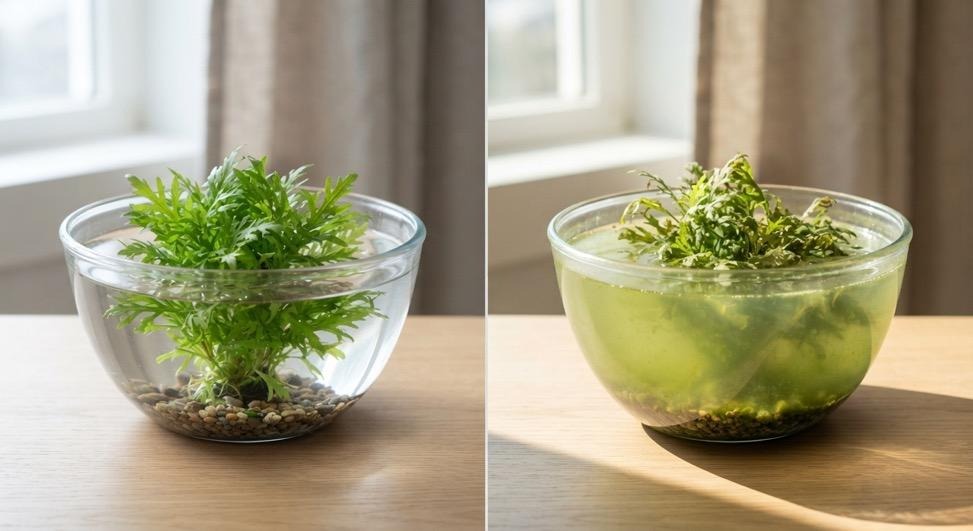
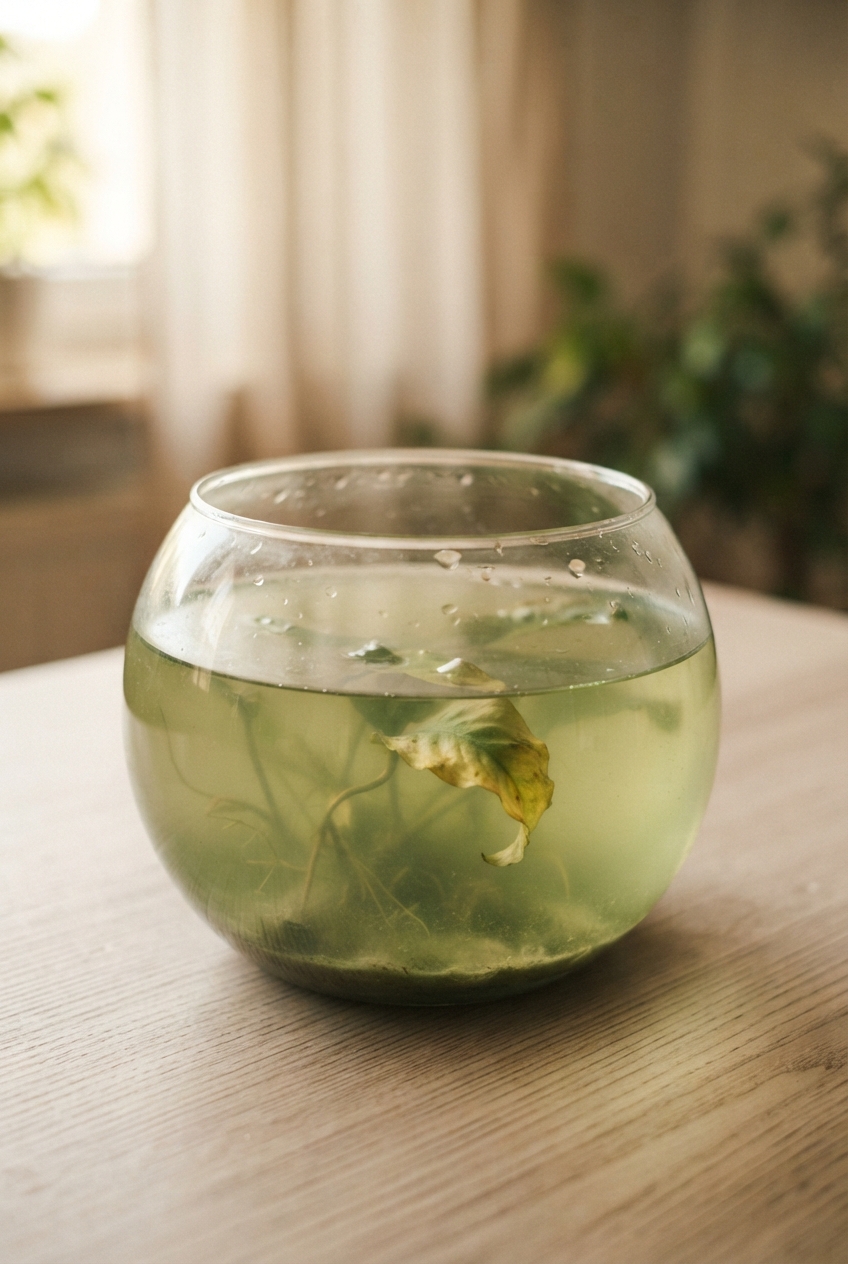
Green, tinted water — almost always algae. This is a light-and-nutrient problem, and it’s the most common type of cloudiness by a wide margin.
Milky white, almost foggy water — usually a harmless bacterial bloom, and it’s especially common in containers that are less than a week old. This one tends to resolve itself.
Cloudy with a bad smell — this is the one that actually needs attention. Something is decaying in the water.
If yours doesn’t have a smell and isn’t a deep, vivid green, you’re very likely dealing with one of the two easy cases below.
Case 1: It’s Brand New (Less Than a Week Old)
If your water garden is only a few days old, slight cloudiness is completely normal and doesn’t mean anything is wrong. A newly filled container needs about a week to settle — plants start taking up nutrients, surfaces in the container develop a thin beneficial film, and the water finds its own quiet balance. During that window, mild haziness is just part of the process.
What to do: nothing, for now. Resist the urge to change the water repeatedly during this settling period — it’s the single most common mistake beginners make, and it usually backfires (more on why below). Give it the full week before you judge whether something’s actually wrong.
Case 2: It’s Green — This Is an Algae Problem
Green cloudiness means algae has found exactly what it needs to thrive: light and nutrients. Algae is a plant too, and it competes directly with whatever you’re actually trying to grow.
The light side of the equation. Direct, all-day sun on an open container is the single fastest way to trigger a green bloom. If your water garden sits in a spot that gets hours of harsh direct light, that’s very likely your answer. Bright, indirect light — a few feet back from a sunny window — is the sweet spot for almost every water garden project; it’s enough for most plants to thrive without handing algae a free buffet.
The nutrient side. Algae also needs food, which usually comes from decaying plant matter, overfeeding (if there’s a fish involved), or simply too few live plants competing for the same nutrients. A well-planted container tends to stay clearer than a sparse one, because living plants are quietly starving out any algae trying to take hold.
The fix, in order:
- Move the container somewhere with less direct light.
- If there’s a fish, cut back feeding to a pinch, only what’s eaten within a couple of minutes.
- Add more live plants if the container feels sparse.
- Be patient — this corrects over one to two weeks, not overnight. There’s no instant reset here, and trying to force one usually causes more problems than it solves.
Case 3: There’s a Bad Smell — Now It’s Worth Investigating
A sudden bad smell, especially anything like rotten eggs, means something is decaying and needs to be found and removed — a dead leaf, uneaten food building up, or in rare cases, a dead animal. This is the one scenario where quick action actually matters.
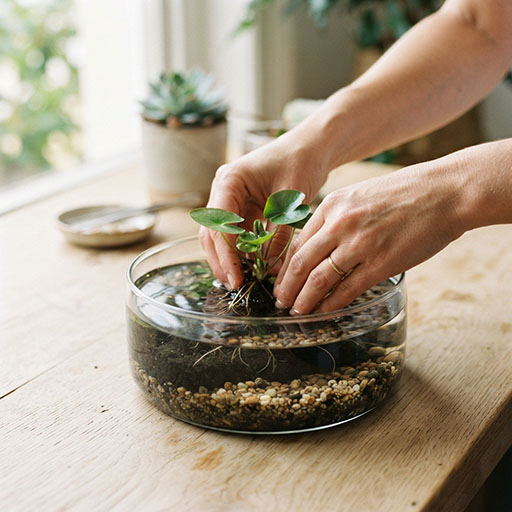
What to do: find the source, remove it, and follow up with a modest partial water change (not a full one — see below for why). If the smell doesn’t clear after that, check every plant and surface carefully; decaying matter can hide in places that aren’t immediately obvious.
The Mistake That Makes Everything Worse
Here’s the part almost everyone gets backwards. When a water garden looks even slightly cloudy, the instinct is to fix it the way you’d fix almost anything else that looks wrong: clean it thoroughly. Dump the water, rinse everything, start fresh.
This is usually the wrong move, and it’s worth understanding why. A water garden that’s a few days old is more fragile than one that’s a few weeks old, because a small ecosystem needs time to settle into balance — plants taking up nutrients, surfaces developing a thin beneficial film, everything finding equilibrium. A full water change resets that clock. It doesn’t just fail to fix the cloudiness; it frequently causes the container to cloud up again shortly after, because you’ve wiped out the very balance that was starting to establish itself.
The better approach, in every case except a genuine emergency (bad smell, oil sheen, a dead animal):
- Change about 10–20% of the water, not all of it, roughly once a week.
- Let a new container settle for a full week before deciding something’s wrong.
- Treat total water changes as a rare, emergency-only tool — not routine maintenance.
If you take one thing away from this article, make it this: balance comes from small, consistent changes, not big, occasional ones. It’s the single rule that prevents almost every cloudy-water problem before it starts, and it’s the one most first-time water gardeners have to learn the hard way.
A Quick Reference, So You Don’t Have to Re-Read This Next Time
- New container, no smell, slight haze → normal, give it a week, don’t touch it.
- Green, cloudy, been going for a while → too much light and/or too many nutrients. Move it dimmer, feed less, add plants, wait one to two weeks.
- Bad smell → find and remove the decaying source, then do a modest partial change.
- Fish gasping at the surface → this is the one true emergency. Do an immediate partial water change with properly treated water and cut back feeding.
- Anything else → resist the full reset. Small, regular changes beat big, rare ones almost every time.
This is one piece of the balance system covered in How to Build a Water Garden at Home — if you’re just getting started, that guide covers containers, plant choices, and your first project from scratch. For the full troubleshooting flowchart, water-change cheat sheet, and thirty guided projects, the complete book — The Water Garden — has everything this article only had room to summarize.
The Tabletop Garden: https://www.amazon.com/dp/B0H8HGD8VX
The Miniature Garden: https://www.amazon.com/dp/B0HB96HTM5
The Water Garden: https://www.amazon.com/dp/B0HBMC1W77