Marimo Moss Ball Care Guide (The Easiest Water Plant You Can Own)
Meta description: Everything you need to know about marimo moss ball care — light, water changes, rolling, and why it’s the most forgiving water plant a beginner can start with.
If you’re looking for the single easiest way to start keeping a water garden, this is it. A marimo moss ball needs almost no light, almost no maintenance, and almost nothing can kill it. It’s also, despite the name, not actually a moss at all — and understanding what it really is makes caring for one a lot more intuitive.
This guide covers everything: what a marimo actually is, how much light and water it needs, how to keep it round, and the handful of things that can genuinely go wrong (there aren’t many).
What Is a Marimo, Really?
A marimo is a ball-shaped colony of filamentous algae — not moss, despite the common name. In the wild, it forms in a small number of lakes where gentle wave action slowly rolls loose strands of algae into a dense, round ball over years, sometimes decades. The ones sold for home aquariums are typically hand-rolled from farmed algae into the same shape, which is why they’re often small and perfectly round from the start.
Because it’s algae rather than a true plant, a marimo behaves differently from almost everything else in a water garden. It doesn’t need soil, doesn’t root into anything, doesn’t flower, and doesn’t really grow quickly at all — a marimo can take years to grow just a centimeter or two. What it does instead is simply persist, calmly, for a very long time. It’s genuinely common for a well-kept marimo to live for decades.
Light: The Most Forgiving Plant in This Category
If you remember one thing about marimo care, make it this: it tolerates lower light better than almost anything else you could put in a water garden. Indirect light — even fairly dim indirect light, well back from a window — is completely fine. Direct sun for long stretches is actually the one thing to avoid, since it can encourage the ball’s surface to bleach or brown in patches, and in a small container, direct sun also raises the risk of the kind of algae bloom that clouds up the surrounding water.
A north-facing windowsill, a shelf a few feet from any window, or even a desk under office lighting all work. If you’re not sure whether a spot is bright enough, it almost certainly is — marimo is far more likely to suffer from too much light than too little.
Setting One Up
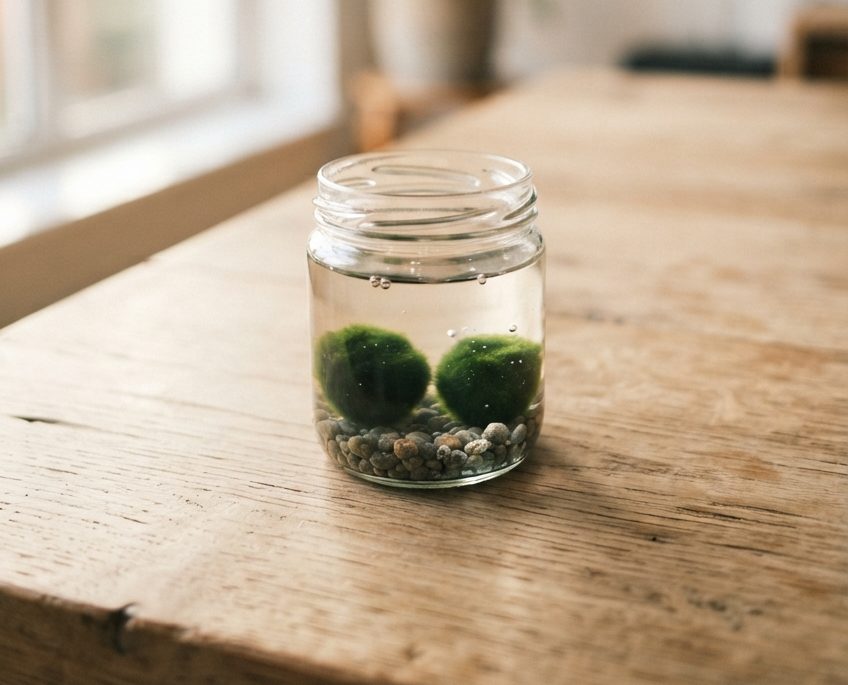
There’s genuinely very little to it. A clear jar, treated water, and the moss ball itself is the entire project — no soil, no substrate, no planting required.
What you’ll need: a clear jar or bowl, treated water (a few drops of aquarium dechlorinator neutralizes tap water instantly), one or two marimo balls, and a few small pebbles if you want some visual interest at the bottom.
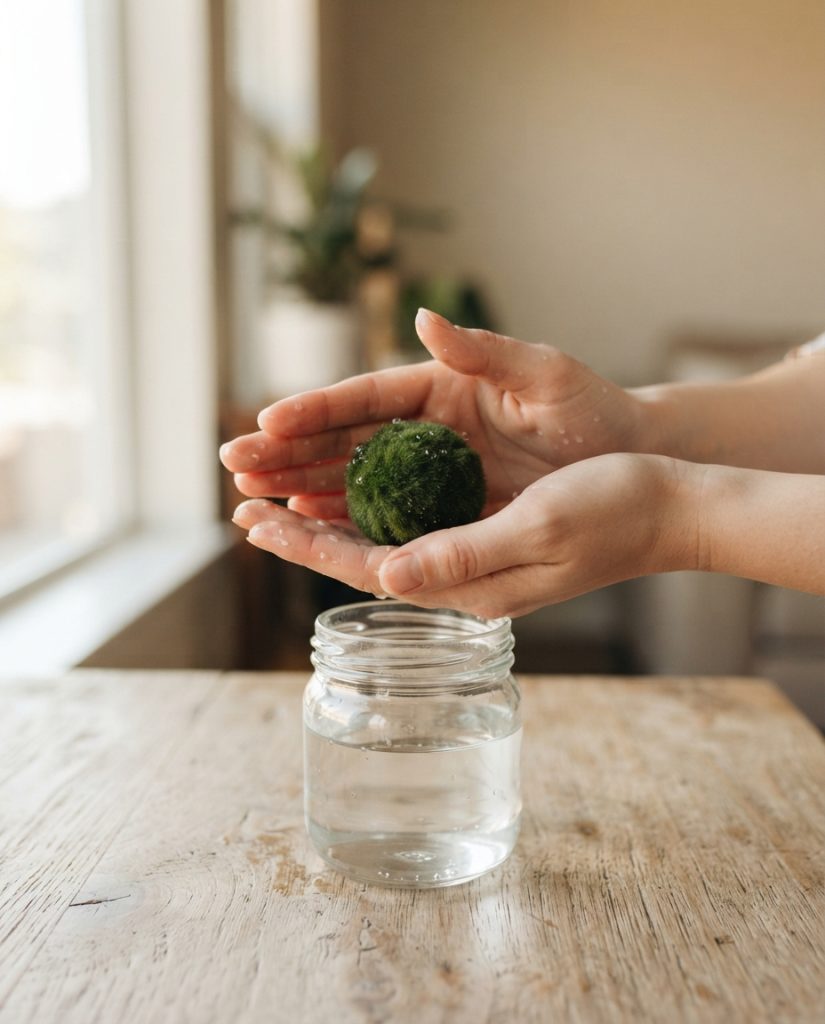
How to set it up:
- Fill the jar with treated water.
- Drop in the marimo ball.
- Add pebbles if you like the look, though they’re entirely optional.
That’s the whole project, start to finish, in about five minutes.
Ongoing Care: Rolling, Water Changes, and What to Watch For
Water changes. Marimo doesn’t need frequent water changes the way a heavily planted or fish-stocked container does. Every two to three weeks is plenty — simply pour out the old water and refill with fresh treated water.
Rolling. This is the one piece of care unique to marimo, and it matters more than people expect. Each time you change the water, gently roll the ball in your palm for a few seconds. In the wild, wave action does this naturally, keeping the ball’s growth even on all sides and its shape round. Without occasional rolling, one side can start to flatten or discolor from resting against the bottom of the container.
Trimming. You genuinely won’t need to do this often — marimo grows so slowly that reshaping is rarely necessary. If a stray strand does come loose, it’s fine to simply tuck it back in or trim it away.
What Can Actually Go Wrong (It’s a Short List)
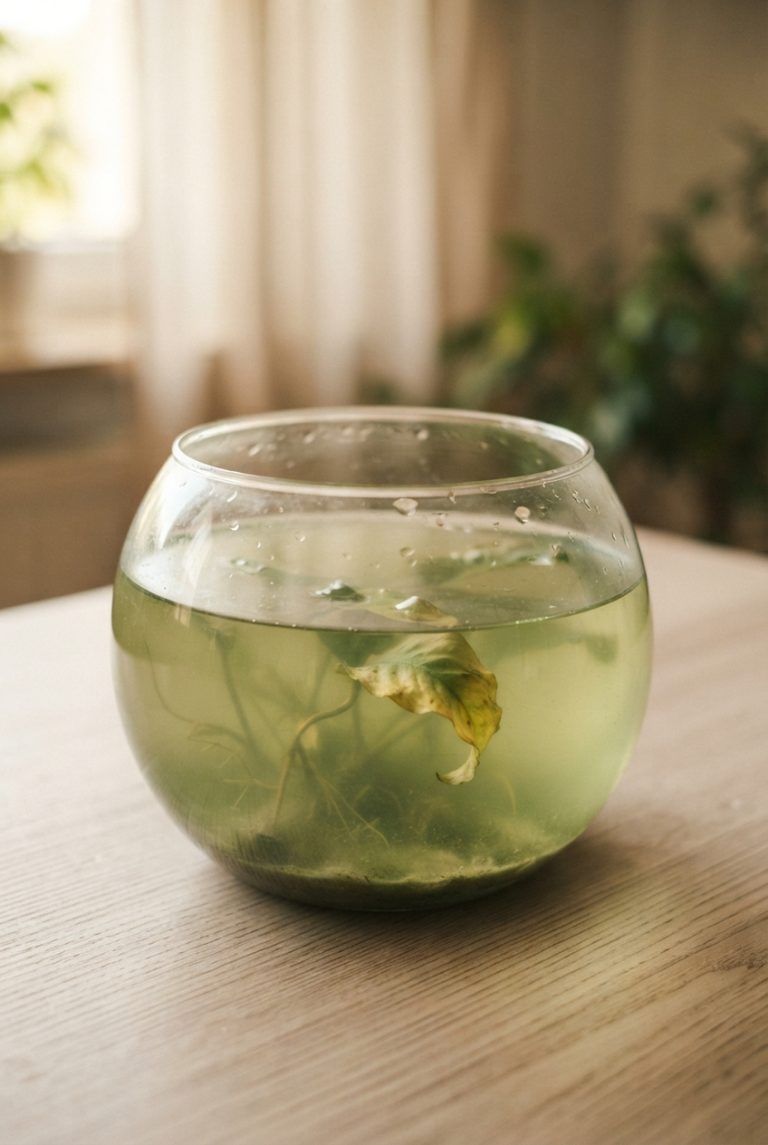
The ball turns brown or black in patches. This is usually old, decaying growth on the inside of the ball rather than a sign of a dying plant — marimo can develop small dark patches internally over time. Gently squeezing the ball underwater to flush out trapped debris, followed by a fresh water change, usually resolves it. If the whole ball has gone uniformly dark and mushy rather than just a patch, that’s a sign it’s actually died, which is uncommon but does happen, usually from prolonged direct sun or very old, unchanged water.
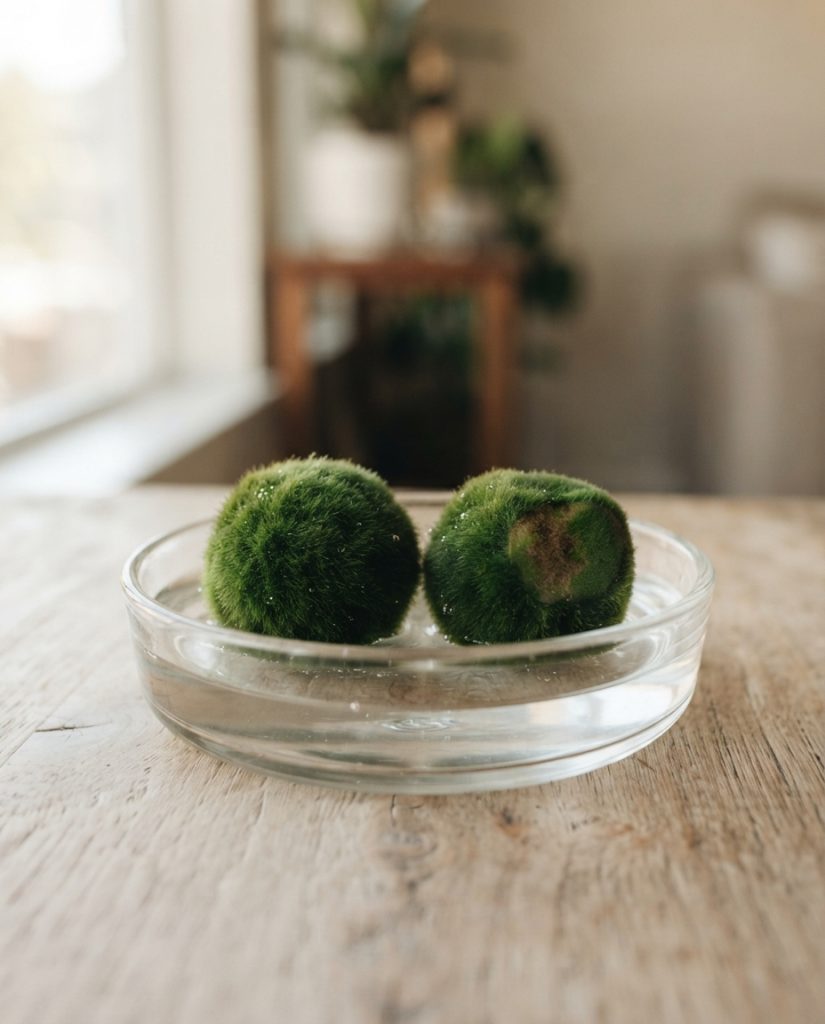
It’s floating instead of sinking. A healthy marimo typically sits on the bottom of its container. Floating usually means gas has built up inside the ball from photosynthesis, and it’s mostly harmless — gently squeezing it underwater releases the trapped air, and it should sink back down within a day or so.
It’s losing its round shape. This is almost always just a rolling issue. Pick it up, roll it in your palm for a few seconds during your next water change, and the shape gradually evens back out over the following weeks.
Why This Makes Such a Good First Project (or Gift)
A marimo is close to the perfect entry point into water gardening precisely because so little can go wrong with it. There’s no soil to get the ratio wrong, no light requirement that’s easy to misjudge, and no feeding schedule to overthink. It’s also, for exactly the same reasons, one of the better small gifts you can put together — a jar, a marimo, and a simple care card covers everything a recipient would ever need to know.
If you’re new to water gardening entirely, How to Build a Water Garden at Home covers the basics from scratch, including how to choose a plant suited to your light. And if you’ve already got a marimo (or any water garden) that’s turned cloudy, Why Is My Water Garden Cloudy? walks through exactly what’s going on and how to fix it. Both — along with thirty guided projects, a full plant directory, and a complete troubleshooting flowchart — are part of the full book, The Water Garden.
-The Tabletop Garden: https://www.amazon.com/dp/B0H8HGD8VX
-The Miniature Garden: https://www.amazon.com/dp/B0HB96HTM5
-The Water Garden: https://www.amazon.com/dp/B0HBMC1W77
-The Vertical Garden: https://www.amazon.com/dp/B0HCCKNCYB